



Infant food production is one of the most demanding industrial processes in terms of safety, quality and health control.
In this context, water is not just a resource: it is a critical ingredient. Guaranteeing its purity is essential to protect the health of the most vulnerable consumers.
Today, technological innovation is revolutionising water treatment for the food industry, making it possible to reach ever higher and more sustainable quality standards.
In SITRA, innovation in water treatment is a strategic pillar for the food industry, especially in the infant nutrition sector, where the reliability of systems is decisive in ensuring maximum safety and quality of the final product.
The role of water in infant food
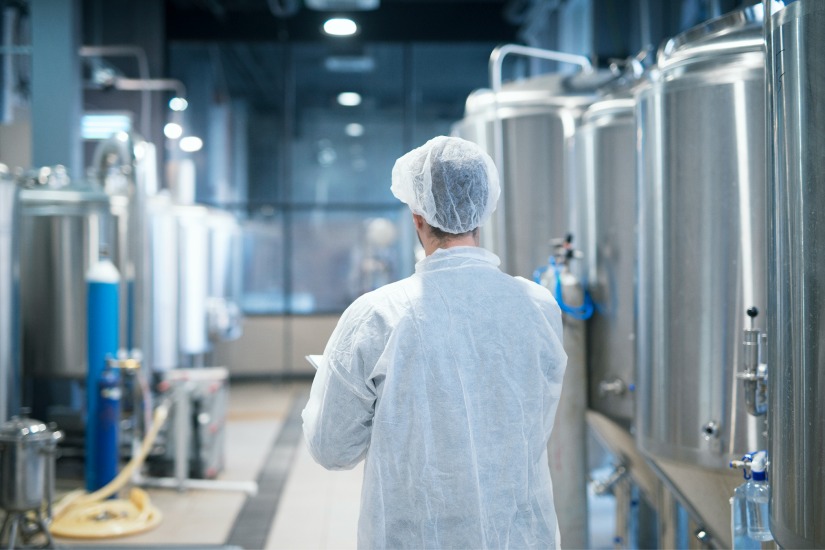
Water is involved in multiple stages: product formulation, equipment cleaning, steam generation and thermal processes. Any microbiological, chemical or physical impurity can compromise the safety of the final food.
For this reason, water treatment for the food industry in this sector requires specific technologies, constant monitoring and solutions adapted to very strict regulations.
Water treatment technologies have evolved to meet these needs, integrating advanced processes capable of removing emerging contaminants, resistant microorganisms and chemical traces.
Advanced technologies redefining water quality in the food industry
The evolution of water treatment has enabled the food industry, and especially the infant nutrition sector, to incorporate technological solutions capable of achieving unprecedented levels of purity, safety and control.
The integration of advanced systems optimises production processes, reinforces regulatory compliance and guarantees constant, verifiable water quality at every stage of production.
Reverse osmosis: purity at molecular level
The reverse osmosis in the food industry is one of the most effective technologies for obtaining water of the highest quality. Using semipermeable membranes, this system removes dissolved salts, heavy metals, nitrates, microorganisms and other contaminants.
The reverse osmosis in the infant food industry guarantees a constant, controlled water composition, essential to maintain the nutritional stability of the product.
It also reduces dependence on subsequent chemical treatments, in line with the sustainability goals of water treatment for the modern food industry.
If you are interested in finding out more about this topic → Sitra launches a new system for the treatment of highly complex water using vibrating membranes.
UV disinfection: effectiveness without residues
Ultraviolet radiation is a highly effective solution among water treatment technologies. Its function is to inactivate bacteria, viruses and other pathogens without altering the physico-chemical properties of the water.
In infant applications, UV is especially valuable because it generates no chemical by-products. Integrated within an advanced disinfection strategy, it makes it possible to maintain microbiological safety without compromising the taste or quality of the final product.
Controlled ozone: powerful and safe disinfection
The use of ozone in industrial systems has grown notably in recent years. Applied in a controlled way, it is a fundamental tool in the advanced disinfection of water for infant food, since it acts quickly against microorganisms and decomposes into oxygen without leaving residues.
Within water treatment for the food industry, ozone is used both in process water and in CIP cleaning, reducing the consumption of chemicals and improving operational efficiency.
Technology integration: intelligent hybrid systems
The real innovation lies not in a single technology, but in their integration. Current systems combine reverse osmosis, UV and ozone to create multiple safety barriers in the food industry. This approach guarantees constant water quality even when the incoming water varies.
These water treatment technologies are managed through digital control systems, real-time sensors and advanced automation, which make it possible to anticipate incidents and optimise consumption.
Sustainable management and wastewater treatment
Innovation in water does not end with the production process. Wastewater treatment is equally crucial for the food industry.
The application of advanced treatment solutions makes it possible to reuse water, reduce discharges and comply with increasingly demanding environmental regulations, reinforcing the commitment to the circular economy.
To better understand these processes, it is essential to know how an industrial wastewater treatment plant works, which details the stages and technologies involved.
Benefits of water treatment technologies in infant food production
The implementation of water treatment technologies advanced brings direct benefits:
- Greater microbiological safety thanks to advanced water disinfection.
- Constant product quality through reverse osmosis in the food industry.
- Reduction in chemicals and an improved environmental profile.
- Regulatory compliance and full traceability of the process.
All of this strengthens the confidence of manufacturers, regulators and end consumers.
SITRA's role in water innovation
SITRA designs and implements tailor-made solutions for water treatment in the food industry, integrating the most advanced technologies and in-depth knowledge of the sector.
From conceptual design to commissioning and maintenance, innovation translates into efficient, future-ready systems.
➡️ Contact with SITRA and discover how our advanced water treatment technologies can help you ensure the highest levels of safety, quality and sustainability in the production of baby food.