
Sitra, empresa especializada en la gestión del agua industrial, acompaña siempre a sus clientes con nuevas tecnologías de simulación computacional de fluidos para garantizar un correcto diseño e implantación de las instalaciones y evitar cualquier impacto sobre el medio receptor, esto cobra mayor relevancia, si cabe, cuando el agua tratada se debe verter a un medio tan sensible como el Dominio Público Hidráulico.
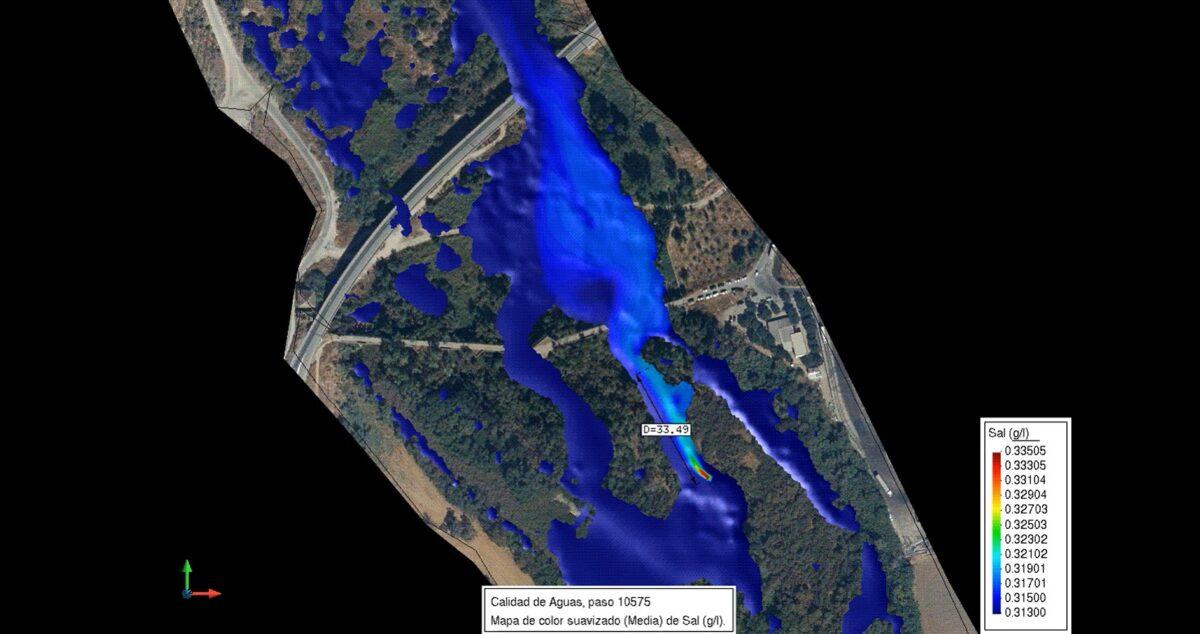
En este contexto, Sitra ha desarrollado un estudio con el objetivo de valorar el impacto de la conductividad del vertido de una EDAR industrial en el cauce receptor, así como su efecto en el cumplimiento de los objetivos medioambientales fijados para el mismo. Esta iniciativa se ha realizado a demanda del organismo de Cuenca como requisito previo para la resolución favorable de la renovación de la autorización de vertido vigente debido a la naturaleza del vertido y la variabilidad de los valores de conductividad registrados históricamente.
Como bien es sabido, la salinidad es unos de los graves problemas que acecha a nuestros ríos, empeorando su calidad, condicionando los ecosistemas fluviales y poniendo en riesgo los distintos usos a los cuales puede destinarse dicha agua. Por ello, en este trabajo se han analizado diferentes situaciones correspondientes a varios escenarios, tanto en el vertido como en las condiciones hidráulicas y temporales del medio receptor. Cabe destaca que, para ello, Sitra ha trabajado con diferentes herramientas de simulación, IBER y ANSYS v19.2, para poder estudiar y prever el comportamiento y la interacción de fluidos en espacios 3D, estudiando diferentes modelos turbulentos.
Los resultados obtenidos han permitido al cliente mostrar una adecuada dispersión de esta conductividad a lo largo de la pluma de vertido, garantizando el buen estado de la masa de agua superficial lo que ha derivado en la renovación de la autorización de vertido, garantizando el cumplimiento estricto de los límites de vertido y de los objetivos medioambientales fijados para la masa receptora.
Además, con este trabajo se pone de manifiesto la relevancia de las herramientas de simulación relacionadas con los estudios hidrológicos, garantizando un equilibrio entre el desarrollado económico y el cumplimiento de la legislación vigente sobre calidad de las aguas superficiales.
Por último, cabe recordar que la simulación Computacional de Fluidos (CFD) es una rama de la mecánica de fluidos que permite calcular en 3D el comportamiento de los fluidos de forma detallada en un amplio abanico de condiciones. En el caso de vertidos a cauce fluvial, debido a las limitaciones técnico-económicas que presentan las medidas experimentales y la monitorización online para entender la dinámica de los contaminantes transportados en el río, la simulación CFD se presenta como una técnica complementaria y de gran utilidad capaz de calcular la evolución de la pluma de contaminante y evaluar el impacto ambiental generado.