
Suscríbete a nuestro blog y te enviaremos por email los nuevos artículos que publiquemos.
Suscribirme a la newsletter
En SITRA disponemos de herramientas eficaces para determinar el tratamiento más efectivo a un menor coste.
En concreto, hemos desarrollado Estudios de Bioeficacia que permiten aislar previamente los microorganismos específicos que han colonizado una instalación, reproducirlos en laboratorio y enfrentar esas cepas concretas a una batería de biocidas con el objeto de determinar su eficacia. Un sistema que nos permite optimizar el tratamiento empleado en cada caso, tanto efectiva como económicamente.
Los biocidas se utilizan para controlar la presencia de microorganismos en el agua de los procesos industriales tanto en circuitos de refrigeración, como en el tratamiento de aguas de aporte o en circuitos de agua de procesado industrial, entre otros.
Para garantizar su eficacia en cada instalación, los programas de actuación con biocidas deben basarse en ensayos específicos de cultivo y sensibilidad frente a agentes efectivos para cada una de las especies concretas que se requiera controlar. Y, en ese sentido, a la hora de estudiar cada sistema concreto hay que tener en cuenta los potenciales efectos secundarios que la adición de un determinado producto puede tener en el proceso de producción.
Los microorganismos en general son capaces de desarrollar formas resistentes a un medio determinado, por lo que es necesario revisar periódicamente el programa de control utilizado. Y, para que el programa resulte económico, a menudo en los tratamientos se combina un biocida altamente efectivo pero caro con otro de amplio espectro y más económico que haga razonable el coste total del tratamiento.
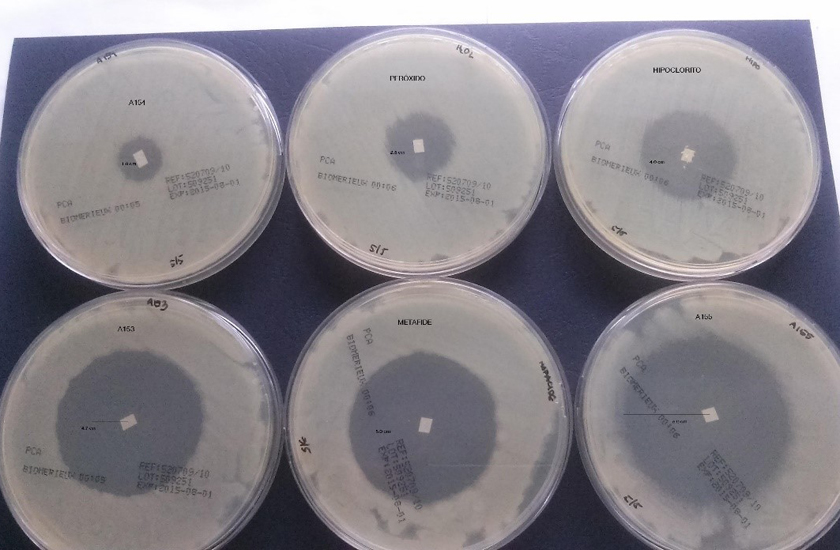
Sin embargo, en los Estudios de Bioeficacia que hemos desarrollado las placas de laboratorio se siembran con aerobios aislados y se enfrentan a diversos biocidas, lo que permite formar un halo de inhibición proporcional al efecto inhibidor que cada biocida estudiado tiene sobre la carga microbiana empleada.
Entre otras ventajas, este sistema nos permite cuantificar comparativamente la eficacia de los diversos biocidas estudiados y determinar el coste del tratamiento en base a las dosis óptimas encontradas.
El uso de esta herramienta de análisis y control de manera periódica nos permite, además, mantener la calidad microbiológica de las aguas industriales y controlarlas al mejor coste sin que los tratamientos pierdan su efectividad por la posible aparición de resistencias a los tratamientos previos empleados.


