
Suscríbete a nuestro blog y te enviaremos por email los nuevos artículos que publiquemos.
Suscribirme a la newsletter
Dentro del campo de la depuración de aguas residuales, las herramientas de simulación de procesos en Estaciones Depuradoras de Aguas Residuales (EDAR) se han convertido en un elemento indispensable a la hora de diseñar sistemas y calcular los rendimientos de depuración para controlar el proceso a nivel global. Sin embargo, cuando se desea conocer en profundidad qué ocurre en el interior de los tanques donde se llevan a cabo los procesos de depuración, los softwares tradicionales presentan limitaciones sustanciales. Una situación que ha conducido a la implementación de nuevas herramientas de simulación más sofisticadas en el sector de la depuración.
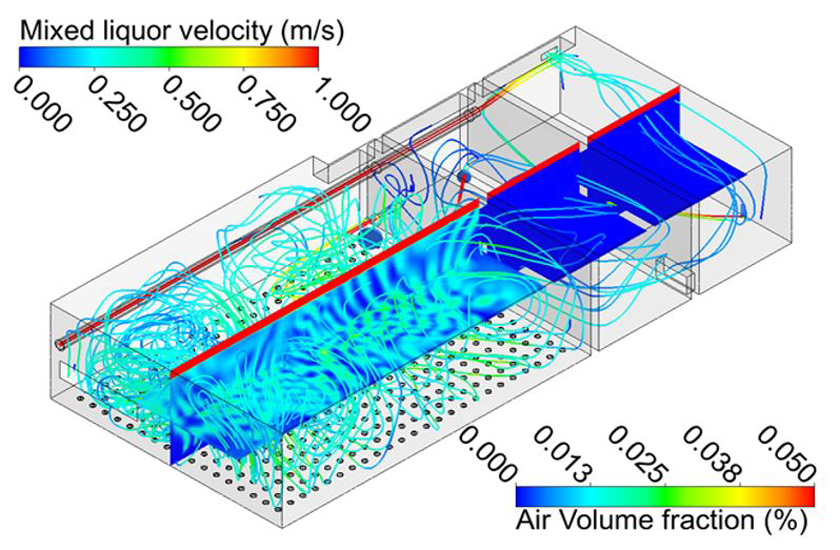
La simulación Computacional de Fluidos (CFD) es una rama de la mecánica de fluidos que, entre otras ventajas, permite calcular en 3D y de una forma muy detallada, en un amplio abanico de condiciones, el comportamiento de los mismos.
Los resultados de los análisis CFD se utilizan de forma general para el estudio de nuevos diseños, para el desarrollo de nuevos productos, reparaciones, rediseños y optimización. Y es que estas herramientas permiten detectar, reproducir y analizar problemas específicos relacionados con la hidráulica del sistema.
En ese sentido, la puesta en marcha de la nueva línea de negocio HYDRENS ha permitido trabajar en la aplicación de estas herramientas de simulación en diferentes unidades de proceso que tienen lugar en el interior de una EDAR. Además de estudiar el comportamiento hidráulico, según la tipología de tanque y proceso objeto de estudio se han incorporado con éxito diferentes modelos específicos como los bioquímicos, sedimentación de fangos activos, o la radiación UV, entre otros. De este modo, actualmente se dispone de multitud de experiencias a escala real que han sido validadas experimentalmente mediante técnicas e instrumentación específicas.
Más información: Portfolio_Hydrens


