

Suscríbete a nuestro blog y te enviaremos por email los nuevos artículos que publiquemos.
Suscribirme a la newsletter
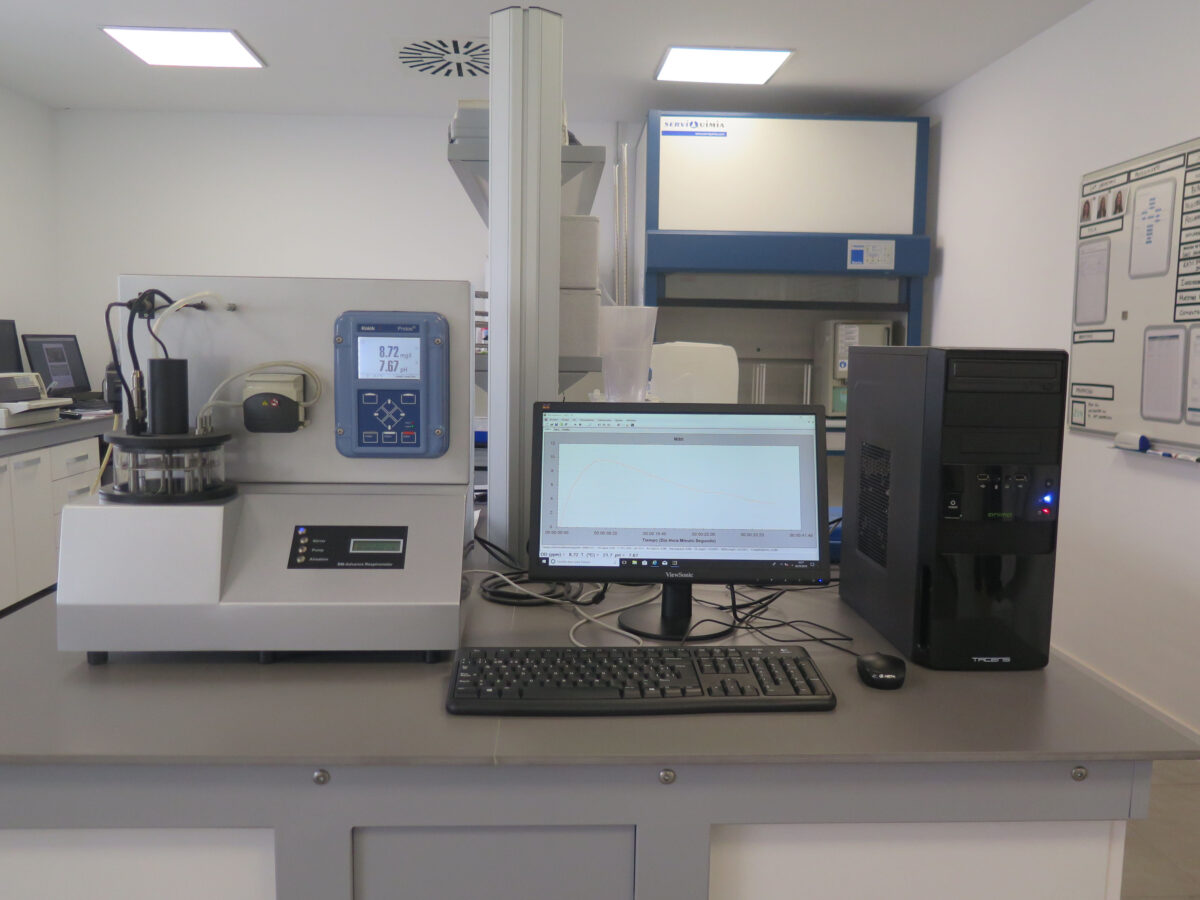
En SITRA ofrecemos la posibilidad de realizar estudios avanzados de fangos activos mediante técnicas respirométricas. Un sistema que, entre otras ventajas, permite ahorrar tiempo y costes asociados al control operacional de los procesos de depuración en las plantas industriales, además de detectar de forma anticipada posibles problemáticas que pudieran afectar al proceso, con el fin de garantizar su continuidad operativa.
La respirometría es una técnica que mide la velocidad de consumo de oxígeno y la cantidad de oxígeno consumido por las bacterias contenidas en el fango activo (lodo activado) de una estación depuradora, tanto para su propia supervivencia (respiración endógena) como para degradar (oxidar) el sustrato contaminante en el agua residual (respiración exógena). A su vez, mediante esta técnica es posible calcular de forma automática la tasa de respiración y la velocidad de degradación de la DQO.
Además de testear y modelizar la actividad biológica actual del fango activo, la respirometría permite anticiparse a los efectos que tendrán en el proceso diversos afluentes, conocer el grado de contaminación orgánica y el grado de nitrificación, así como estimar de forma rápida la carga másica o F/M y edad del fango.
Por otro lado, también proporciona parámetros para la prevención y control del fenómeno Bulking & Foaming y permite conocer la tratabilidad del agua residual, en relación a la capacidad de eliminación del sustrato contaminante -bien sea DQO o amonio-, la determinación de la parte biodegradable de la no biodegradable de una muestra determinada; la inhibición por compuestos contenidos en el agua residual o condiciones del tratamiento, así como la toxicidad por compuestos contenidos en el agua residual.
A su vez, esta técnica sirve de complemento para los análisis de bioindicación microscópica y contribuye a determinar la capacidad del fango para realizar correctamente los procesos de nitrificación y desnitrificación.


