
Desde hace años Sitra aplica tecnología de última generación para optimizar la gestión y el mantenimiento de las instalaciones de tratamiento del agua en la industria, incluido el consumo eléctrico. Fruto de esa apuesta la compañía desarrolló hace más de cinco años WIM (Water Industrial Management) la herramienta a través de la cual ha logrado optimizar considerablemente el consumo eléctrico en una empresa de fabricación de snacks.
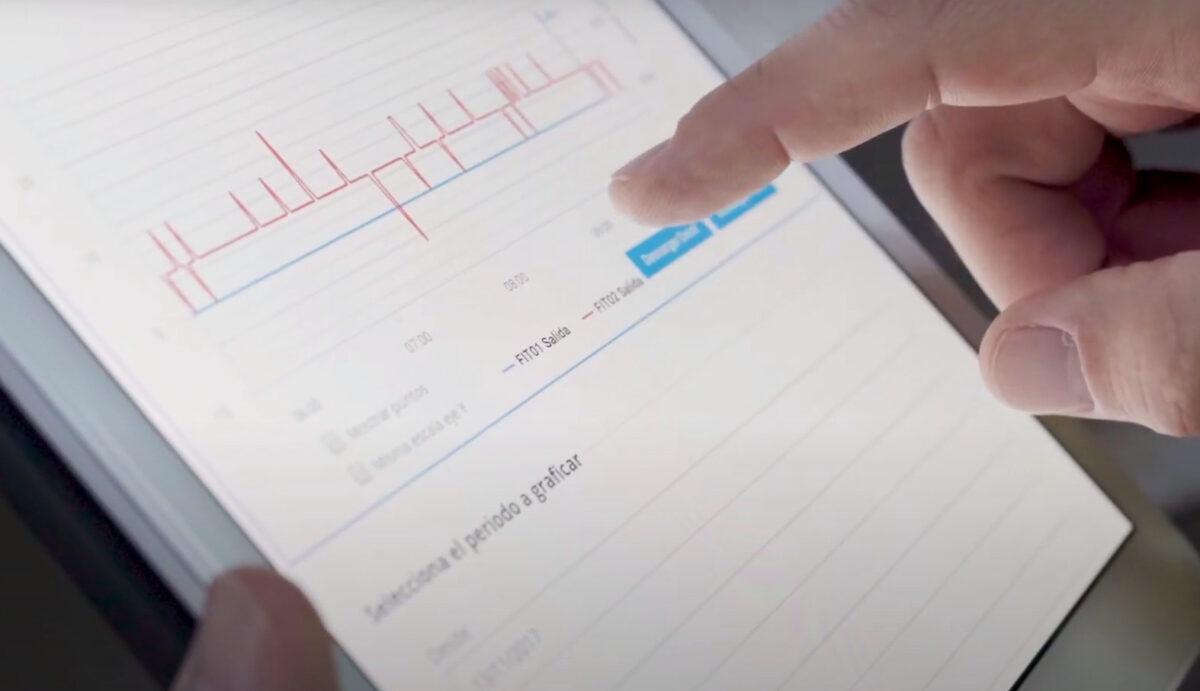
Se trata de un aplicativo tecnológico de desarrollo interno orientado a aumentar la eficiencia en la gestión integral del agua que ha evolucionado con los años y ahora, además de permitir visualizar y controlar de forma remota e integral las instalaciones de tratamiento de agua, también integra sistemas de mantenimiento como GMAO.
En la última implementación de la herramienta WIM, en una empresa de fabricación de snacks, Sitra ha logrado optimizar de manera significativa el consumo eléctrico en un reactor biológico aerobio existente en la instalación del cliente. La posibilidad de obtener datos de horas de funcionamiento de los sistemas de aireación del reactor biológico, y contrastarlos con los datos y valores de las cargas de entrada al reactor ha sido la clave para reducir este consumo.
Al analizar con detalle los datos, se detectó que las horas de funcionamiento de los equipos superaban en mucho las horas de funcionamiento teóricas que deberían estar para aportar el oxígeno necesario para la correcta operación del tratamiento, lo que permitió considerar la ubicación de las sondas en un punto donde pudieran obtener valores más reales del oxígeno disuelto presente en el reactor biológico. Esta adecuación, permitió reducir el consumo eléctrico de los soplantes en aproximadamente un 18 %, con el consiguiente ahorro económico para el cliente.
Por tanto, la gran ventaja de esta herramienta es la obtención de una gran cantidad de datos operacionales de proceso, que apoyados en la experiencia de Sitra en estos procesos, permite abordar soluciones técnicas eficientes en la optimización de costes. Cabe destacar que la herramienta puede ser utilizada tanto en instalaciones ejecutadas por Sitra como en las ya existentes, y permite una parametrización total de los procesos de tratamiento.
Sin duda, este caso de éxito unido a muchos otros, ha demostrado la utilidad de WIM en la optimización de los costes asociados a los tratamientos del agua, sobre todo los derivados de los consumos eléctricos y productos químicos, así como también la optimización de las reparaciones programadas y la gestión de alarmas, que permite abordar de inmediato y en remoto, cualquier tipo de incidencia en planta.